
At Slotsvader Casino, we feel that a truly satisfying gaming experience is founded on a basis of control and awareness. Across Greece, from Thessaloniki to Crete, players are progressively realising that entertainment should never come at the expense of financial wellbeing. Spending limits are one of the most effective tools on offer to help you maintain that balance. They are not about restricting fun; they are about protecting it for the long term. In this guide, we explore the subtle reality of deposit and loss caps, reviewing how they can shield your bankroll while also admitting the discipline they require. Our objective is to provide a comprehensive, professional viewpoint that empowers you to make educated decisions about your gameplay boundaries.
Comprehending Spending Limit Frameworks
Before considering the benefits and cons, it is important to understand exactly how these protective measures work within a modern online platform. Spending limits are established limits that you voluntarily apply to your account, governing how much money you can deposit, stake, or forfeit over a specific period. At Slotsvader Casino, we offer detailed controls that can be set daily, weekly, or monthly. Once a limit is hit, the system immediately prevents further transactions until the timer renews. This is a strict, software-enforced barrier, not a gentle suggestion. The technology operates separately of human emotion, meaning it does not compromise with you during a moment of annoyance or thrill. It is a noiseless, unwavering gatekeeper that carries out your past sensible decisions, overruling your present inclinations.
Funding Limits vs. Loss Limits
It is crucial to differentiate between the two primary categories of financial controls. A deposit limit caps the amount of money you can transfer into your gaming account from a bank card or e-wallet. This is a preventive measure that stops excessive spending before it even enters the ecosystem. A loss limit, on the other hand, records your net losses over a session or defined period. It determines the difference between your deposits and withdrawals, barring you out of gameplay once a specific negative threshold is met. While a deposit limit blocks the inflow of new funds, a loss limit recognizes that you might deposit a set amount, win some back, and still wind up in a deficit. We suggest using both in tandem for a complete safety net that protects your capital from multiple angles.
Session Duration Limits as a Monetary Safeguard
While strictly a temporal restriction, the session time limit is an indirect but potent financial tool. By capping the duration of a single gameplay session, you inherently restrict the volume of wagers you can place. Extended play typically increases exposure to the house edge, and fatigue hinders decision-making. When you set a time limit of one or two hours, you create a hard stop that prompts a moment of reflection. This interruption is usually enough to break a trance-like state where money feels abstract. At Slotsvader Casino, we see time management as a cornerstone of responsible gambling. It is hard to chase losses if the software logs you out and requires a cool-down period before you can log back in to review the situation with a clear mind.
The Main Advantages of Applying Spending Limits
The advantages of forward-thinking financial boundaries reach far beyond just saving money. They fundamentally reshape your relationship with risk and reward, converting gambling from a potential liability into a predictable entertainment expense. For players in Greece, where the bustling nightlife and café culture frequently merge with digital entertainment, having established limits ensures that a night of fun does not evolve into a morning of regret. These tools promote a mindset of intentionality. When you set a budget before logging in, you are treating gaming like any other paid leisure activity, such as concert tickets or a fine dining experience. The emotional calm of knowing you cannot overspend is likely the most important advantage, allowing you to focus entirely on the fun of the game mechanics and thematic immersion.
Avoiding Emotional and Impulsive Decisions
By far the dangerous enemy of a balanced bankroll certainly isn’t the house edge; it happens to be the human amygdala under stress. When a player experiences a significant loss, the brain often enters a state of “tilt,” a poker-derived term for emotional frustration that impairs logic. In this state, the urge to immediately deposit more money to “win back” losses is overwhelming. A strict deposit limit serves as a circuit breaker for this neurological hijacking. It creates a mandatory cooling-off period where the transaction is simply denied, forcing the player to wait until the next day or week. This delay can be therapeutic. It enables the prefrontal cortex—the rational part of the brain—to regain control, reminding the player that chasing losses is a mathematically unsound strategy that usually deepens the financial wound.
Reliable Tracking of Gaming Budgets
Without a strict system, tracking gambling expenditure can be a ambiguous and often undervalued exercise. Small deposits made spontaneously throughout the week can accumulate into a significant sum that shocks you at the end of the month. Spending limits establish a firm ledger. If you set a weekly deposit cap of fifty euros, you know clearly what your greatest liability is. This precision is priceless for household budgeting. It enables you to group gambling alongside other discretionary spending without fear of it bleeding into funds earmarked for essentials like rent, utilities, or groceries. For our users in Greece navigating a unstable economy, this strict compartmentalization is a pillar of financial hygiene. It erases the ambiguity and guilt associated with recreational spending by making it clear and foreseeable.
Psychological Impacts of Personal Limits
The mental discourse surrounding a spending cap is multifaceted and often reflects a player’s broader personality traits. For many, the act of setting a limit is liberating. It is a statement of self-respect and a acknowledgment that future-you might be weaker than present-you. This “Ulysses pact”—making a binding decision in a moment of clarity to protect against a moment of temptation—builds self-efficacy. However, for some, hitting a limit can elicit feelings of shame or anger, directed either at themselves for lacking control or at the casino for “stopping” them. This is a crucial moment. If the reaction is anger, it implies the limit was perceived as an adversary rather than an ally. We guide players to reinterpret the limit as a tool of self-care, much like a diet or a fitness tracker, where hitting the cap is a cue for reflection, not rebellion.
Popular Misunderstandings Regarding Spending Caps
A lot of players oppose implementing limits because of myths that merit to be dispelled. The initial myth is that limits “jinx” winning streaks. There is no mathematical link between a deposit cap and the random number generator. The slot machine does not know you have a limit. The second myth is that limits are only for problem gamblers. This is similar to saying seatbelts are only for bad drivers. Limits are for anyone who appreciates financial precision. The final myth is that raising limits is impossible. As noted, in the Greek regulated space, raising limits demands a deliberate, delayed action, but it is possible for those whose financial circumstances have genuinely improved. We consider that dispelling these myths is part of our educational duty, promoting a community where safety tools are normalized and destigmatized.
Comparing Self-imposed Limits and Compulsory Cool-Offs
There is a difference between a limit that curbs spending but permits play, and a time-out that halts access entirely. Spending limits are a control tool; cool-offs and self-exclusion are avoidance tools. A spending limit allows you to continue playing within a safe zone, whereas a 24-hour cool-off seals the door totally. Both have their purpose. A spending limit is ideal for the player who appreciates daily entertainment and wants to keep it safe. A temporary cool-off is preferable for someone who notices the early warning signs of emotional dependency or tilt. At Slotsvader Casino, we recommend players to use cool-offs preventively. Taking a short break after a bad beat is not a sign of frailty; it is a sign of high emotional intelligence and a tactic used by professional poker players worldwide to safeguard their bankrolls.
The Potential Drawbacks and Limitations
While we at Slotsvader Casino push strongly for the use of financial controls, intellectual honesty requires us to explore their limitations. No tool is a panacea, and an overdependence on software without internal discipline can foster a false sense of security. A common criticism is the “watertight compartment” problem. A resolute player who establishes a limit on one site might simply create an account with an unregulated operator to bypass the restriction. This is a dangerous workaround that exposes the player to platforms lacking the safety standards required in Greece. Furthermore, limits can sometimes generate a psychological “scarcity” mindset, where a player feels pressured to maximize the value of their capped deposit, leading to riskier, higher-stakes bets than they would normally wager in an attempt to outrun the clock or the cap.
The Hazard of Inter-Platform Evasion
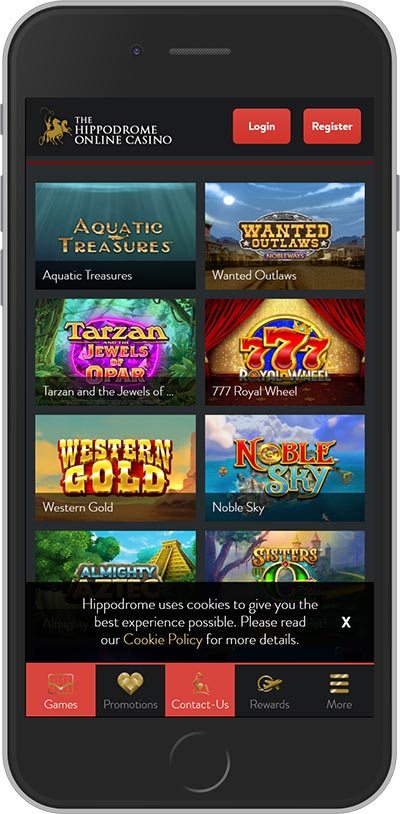
The key structural weakness of a one-site spending limit is the inability to control a user’s behaviour across the whole web. A player who hits their deposit cap at Slotsvader Casino might, in a moment of weakness, search for a rival platform that provides rapid registration with no immediate checks. This is where the limit fails to protect the user’s overall wealth; it merely safeguards their account on one domain. This fragmentation of play is dangerous because it removes the unified budget view. The player ends up spending more than intended, just across multiple ledgers. This is why we highlight that software limits must be paired with personal bankroll management and, in severe cases, broader blocking software that restricts thousands of gambling sites simultaneously, creating a true network-wide barrier.
The Illusion of Absolute Control
Setting a limit can sometimes confer a psychological “licence” to wager up to that limit slotsvaders.net.gr. If a player sets a monthly loss limit of three hundred euros, they might subconsciously treat that figure as a goal to be spent rather than a worst-case scenario to be avoided. This is a delicate cognitive distortion where the safety net becomes a budget allocation. The player might discontinue employing good strategy or stop quitting while they are ahead because they feel they have “paid” for the right to lose that amount. True responsible gambling means regarding limits as an emergency brake, not a speedometer. We advise players to view their limit as a boundary they hope never to hit, rather than a meter they are allowed to fill up. The goal is always to walk away with winnings, not to maximize the usage of a loss cap.
Integrating Limits into a Comprehensive Strategy
Spending limits must not exist in a vacuum. They are most efficient when integrated into a more comprehensive personal policy that includes reality checks and self-exclusion options. We advocate a layered approach. Start with a reality check pop-up every thirty minutes to interrupt autoplay play. Layer a session time limit to prevent fatigue. Then, apply a deposit limit that mirrors your disposable income, not your total bank balance. Finally, set a loss limit that is a fraction of that deposit amount. This creates a defense-in-depth system. If one layer fails due to psychological override, the next layer protects you. It is also vital to review these limits regularly. A limit set a year ago might not correspond to your current financial reality. Treat your account settings as a living document that changes with your life circumstances in Athens, Patras, or wherever you reside.
Supervisory Perspectives from Greece and the EU
The legal landscape in Greece, overseen by the Hellenic Gaming Commission (HGC), adopts a strict approach to player protection. Licensed operators are obligated to present strong limit-setting tools, self-assessment tests, and reality checks. This aligns with broader European Union trends emphasizing harm minimization over pure revenue generation. For a platform like Slotsvader Casino, compliance is not merely a legal checkbox; it is a representation of our operational ethics. The Greek framework is particularly strict regarding the ability to lower limits instantly while requiring a cooling-off period to raise them. This asymmetry is brilliant policy design. It enables a player to tighten their safety belt immediately during a moment of concern, but prevents them from loosening it impulsively during a craving, thereby cementing rational decisions over irrational ones.
FAQ
What takes place when I encounter my deposit limit at Slotsvader Casino?
When you reach your pre-set deposit threshold, our system instantly rejects any further payment transactions for the remainder of the set period. You cannot transfer funds via any payment method until the limit expires. This is an automated safety lock created to enforce the boundary you established for yourself. You can still access any existing balance during this time, but no new deposits will be accepted, guaranteeing your financial exposure remains strictly capped.
Am I able to lower my loss limit immediately if I feel at risk?
Of course. In line with Greek regulatory standards and our commitment to player safety, any decision to reduce a limit or strengthen a restriction takes effect right away. If you feel your current loss cap is too high and you are feeling discomfort, you can access your account settings and cut it right away. The system is designed to prioritize protective actions, ensuring there is zero delay when you choose to bolster your safety barriers during a moment of concern.
Why do I have to wait to raise my spending limits?
The required cooling-off period for raising limits is a critical harm-minimization feature. It stops impulsive decisions fueled by frustration or the “chasing” mentality. If you request a higher limit, a 24-hour (or longer) delay is applied before it activates. This buffer period enables the initial emotional impulse to subside, offering you time to logically assess whether your financial situation really justifies a higher risk exposure or if it was a temporary urge.
Are spending limits a sign that I have a gambling problem?
Not at all. Using spending limits is a sign of financial maturity and responsible entertainment management, not pathology. We equate it to setting a budget for a night out or a holiday. It is a proactive strategy used by the vast majority of professional and recreational players to ensure the activity fun and sustainable. Waiting until a crisis occurs to implement controls is risky; setting them early is simply best practice for anyone who wants to maintain their leisure spending in check.

Do time limits really help with financial control?
Indeed, they are an indirect but highly effective financial tool. The more you play, the higher wagers you place, and the stronger the mathematical house edge compounds against your bankroll. By setting a strict session time limit, you cap the quantity of your betting activity. It also prevents fatigue-induced errors that you might depart from your strategy. A forced log-out forms a natural pause, letting you to pause and assess your net position with a fresh, rested mind.
Leave a Reply